Is There a Pistol That Changes to Rifel and Back Again
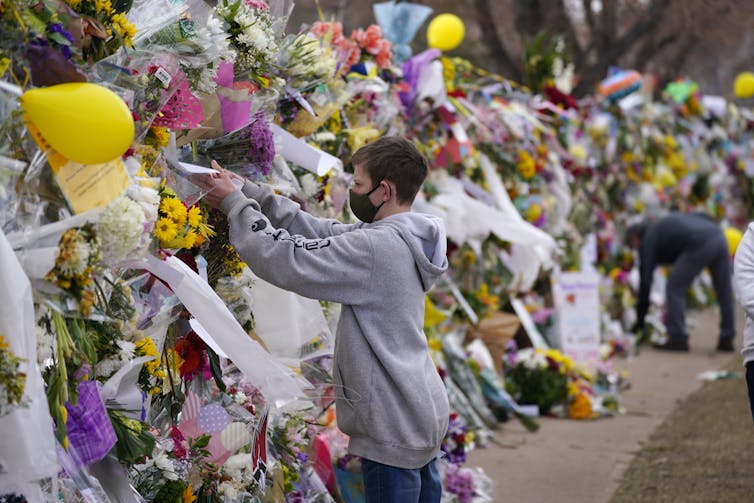
Gun control is dorsum in the U.Southward. political debate, in the wake of mass shootings in California, Boulder and Atlanta.
Democrats run across stricter gun command equally a step toward addressing the trouble. In March 2021, as the House of Representatives passed two gun control bills, Speaker Nancy Pelosi claimed that the "solutions will save lives."
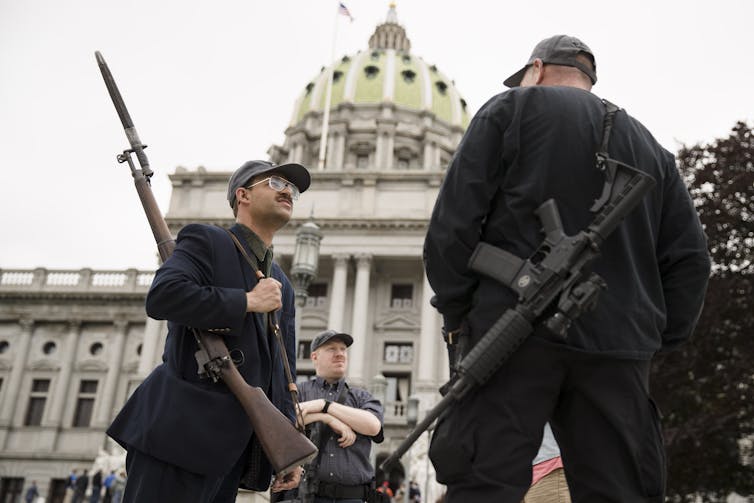
Many Republicans disagree, arguing as Sen. Ted Cruz has that proposed laws seeking to require background checks on all firearms sales and transfers and to ban attack weapons are "ridiculous theater" that fail to reduce mass shootings.
As 2 political scientists trained in data assay, we set out to make up one's mind whether gun control legislation really prevents mass shootings. We nerveless data on all mass shootings that occurred between February 1980 and February 2020. Nosotros then examined key information on the perpetrators, weapons used and laws in effect at the fourth dimension of shooting.
Our research, which is yet to be published in an academic journal, suggests that there is statistical evidence to back up both parties' positions about gun control legislation.
While stricter gun control laws may make mass shootings slightly less common, our research suggests that the rhetoric of both parties may non tell the full story. Rather than federal gun command laws, policies that focus on violence prevention at the community or private levels may be more effective at preventing mass shooting deaths.
Mass shootings in the by forty years
We defined a mass shooting as a single incident in which a perpetrator with no connection to gang activeness or organized offense shot and killed three or more people. This is similar to the definition Congress uses.
We establish there were 112 of these events betwixt 1980 and 2020; the number of mass shootings each yr has increased over time. An overwhelming bulk of mass shooters – 87% of them – obtained their firearms legally. Well-nigh all shooters – 93% – shot their victims in the same country where they obtained their weapons.
These facts suggest that existing gun laws and regulations governing gun purchases and firearms that cross land lines may not be working to reduce mass shootings. Our study did not address whether or how other forms of gun violence might exist affected past those laws.
In fact, mass shootings tended to occur in states with stricter regulations. Of u.s. with the highest per capita rates of mass shootings, many – like Connecticut, Maryland and California – utilize background checks and assault weapons bans.
By dissimilarity, 18 states did non have a single mass shooting event over the entire 40-year flow. Many of these states – like West Virginia, Wyoming and Due south Dakota – have high rates of gun ownership and relatively loose gun control laws.
But those data patterns don't tell the full story of our assay.
The effects of gun laws
Gun laws aren't the only factors that affect where and when mass shootings occur. The number of police officers per capita, a customs's population density and offense rate, and other demographic characteristics such as unemployment rates and average income can also matter.
Nosotros used statistical methods to control for those factors, narrowing our assay to discover out whether various types of gun control laws affected the number of mass shootings or number of mass shooting deaths in each state each year.
Specifically, we examined the effects of four different types of gun control legislation: background checks; assault weapons bans; high-capacity magazine bans; and "extreme risk protection lodge" or "ruby flag laws" that allow a court decide whether to confiscate the guns of someone accounted a threat to themselves or others.
We plant that background check requirements, set on weapons bans and high-chapters magazine bans each reduce the number of mass shootings in the United States – only only by a small amount. For instance, enacting a statewide attack weapons ban decreases the number of mass shootings in the land by one shooting every 6 years. And none of the iv types of gun control legislation correlate with fewer total mass shooting deaths.
And laws that remove an individual'southward correct to own firearms if that private poses a risk to the community do not touch on the number of mass shooting events.
Beyond gun control
Our analysis suggests that Americans who want to make mass shootings less frequent and less deadly may want to call back beyond gun control legislation.
Statistically, mass shootings tend to occur in large, densely populated states with higher income and instruction levels per capita. While these states often respond to mass shootings past passing gun command legislation, it may be that alternative avenues are more successful.
For instance, we find that increasing the number of police officers per capita decreases the number of mass shootings.
There is a wide variety of policy options designed to forestall mass shootings. The American Psychological Association suggests a comprehensive community approach that works to identify prevention strategies that bring public safety officials, schools, public wellness systems and faith-based groups together to reduce gun violence.
Aaron Stark, who says he was about a mass shooter, explains that mass shootings can exist an act of agony resulting from frustration, stress and an individual'south perception that they lack power. This is in line with a new U.S. Secret Service written report that suggests politicians may demand to think beyond the accessibility of guns. Violence prevention strategies that focus on interpersonal and community relations may be more effective than gun control legislation.
Framing the argue
Many policy options involve value judgments stemming from beliefs about the U.S. Constitution and the power of government to regulate guns.
Among people who think that restricting gun admission reduces mass shootings, people disagree over whether the country should prioritize the individual freedoms of gun owners or the safety and peace of heed of non-gun owners. These differing views can reflect different interpretations of the extent to which the Constitution protects the rights of individuals to keep and bear artillery.
States have a office to play, besides. Federal gun policy covers the entire nation. Only our data indicates that attention to state and local factors can play an of import role in preventing mass shootings.
In the end, gun control remains a argue about facts and context, complicated by a disagreement over constitutional values.
[Get the all-time of The Conversation, every weekend. Sign up for our weekly newsletter.]
Source: https://theconversation.com/in-gun-debate-both-sides-have-evidence-to-back-them-up-158118
0 Response to "Is There a Pistol That Changes to Rifel and Back Again"
Post a Comment